
Barcode Scanner
by Atharok · GPL-3.0-or-later · open source
Scan QR and common one-dimensional barcodes with the camera or an image, create your own codes, and keep an on-device history without an account.
Needs:Android 6.0+ · camera for live scanning
2113 Apps is independent, not affiliated with or endorsed by Atharok. Official sources: source code on GitLab.
- Version
- 1.26.3
- Size
- 8.3 MB
- Requires
- Android 6.0+
- Updated
- 2026-07-10
Screenshots
Introduction
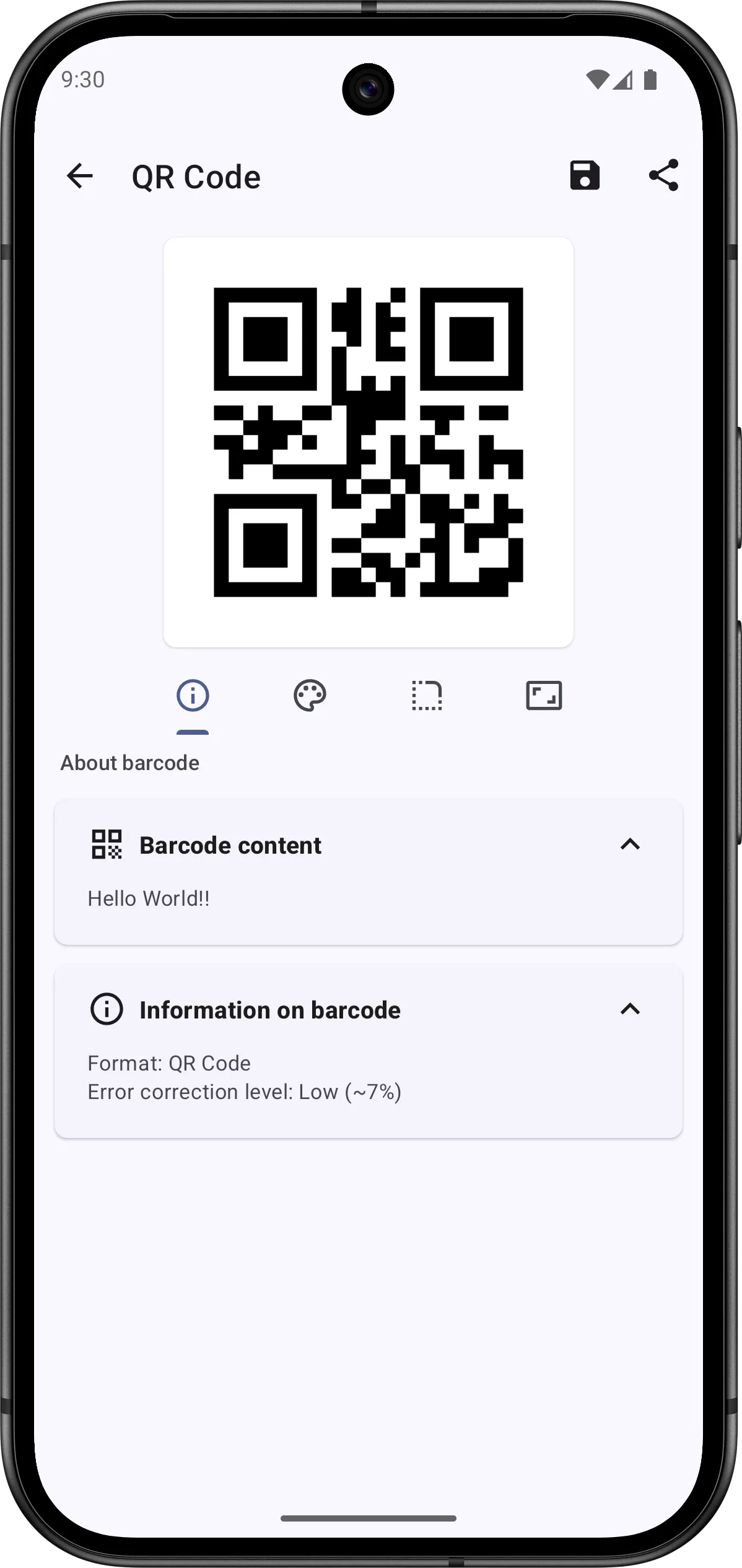
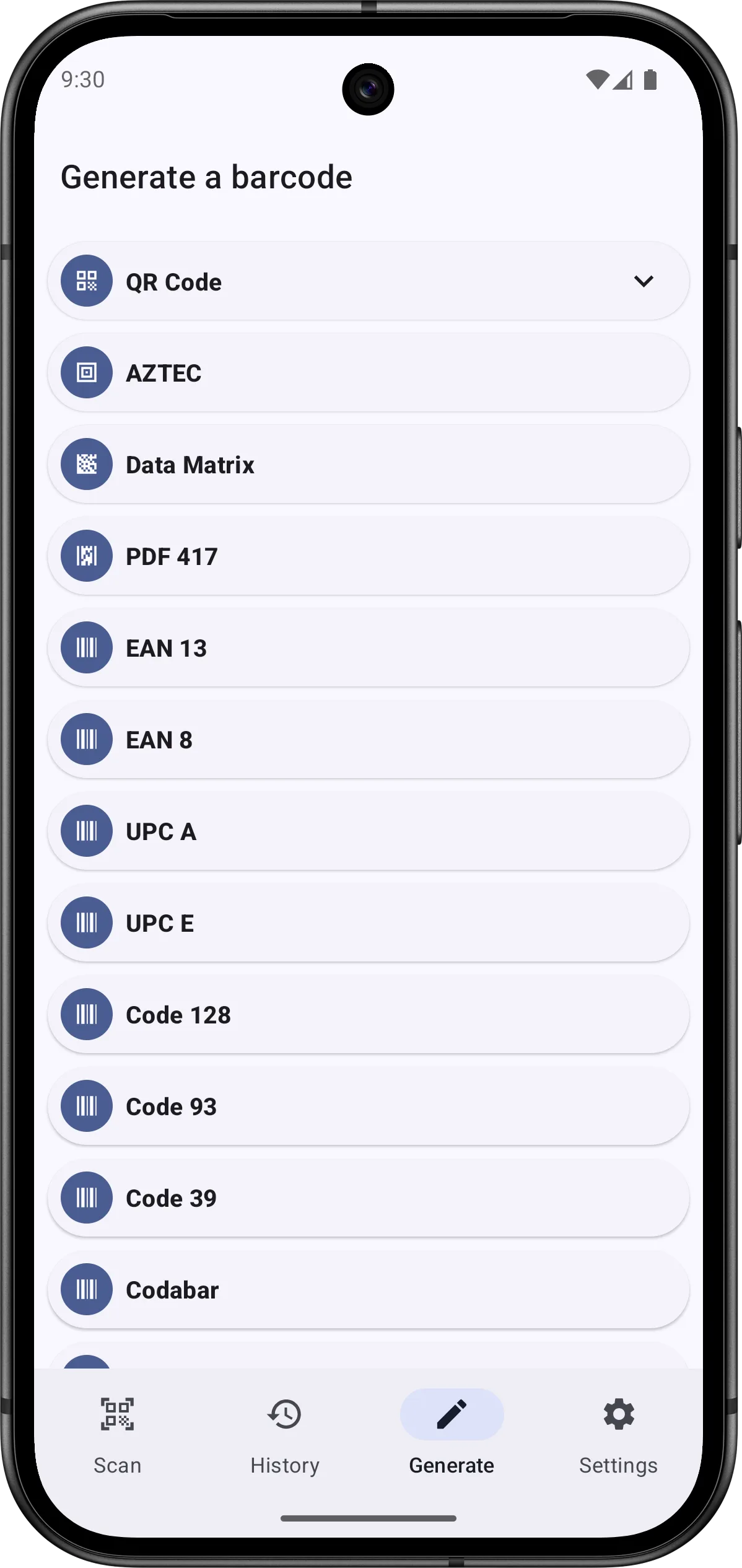
Barcode Scanner by Atharok is an open-source reader and generator for both two-dimensional and conventional retail codes. It recognises QR Code, Data Matrix, PDF417 and Aztec, plus EAN-13, EAN-8, UPC-A, UPC-E, Code 128, Code 93, Code 39, Codabar and ITF. You can aim the camera at a code or choose an image already on the device.
This page covers F-Droid’s 1.26.3 build. We matched the 8.3 MB APK to F-Droid’s signed index, inspected its manifest and checked the exact 1.26.3 source tag. We did not test its camera focus or Wi-Fi connection flow on a physical phone.
Results and actions
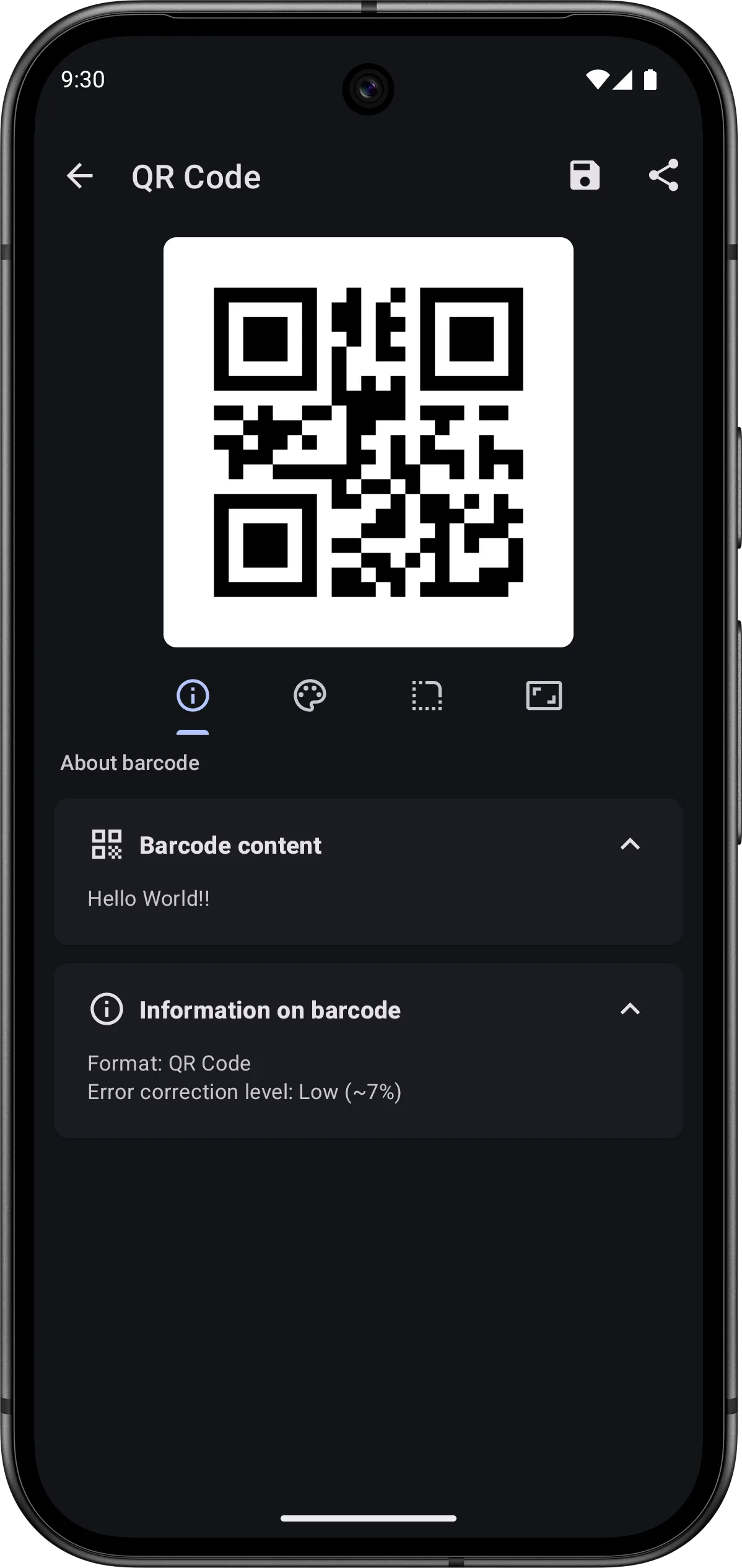
Plain text remains text, while recognised structures get relevant actions. A URL can open in a browser; a vCard or event can be handed to the matching Android app; a Wi-Fi QR code can start a connection flow. The app can also create codes from text and supported structured data. Android still shows the final system or target-app confirmation where the platform requires one.
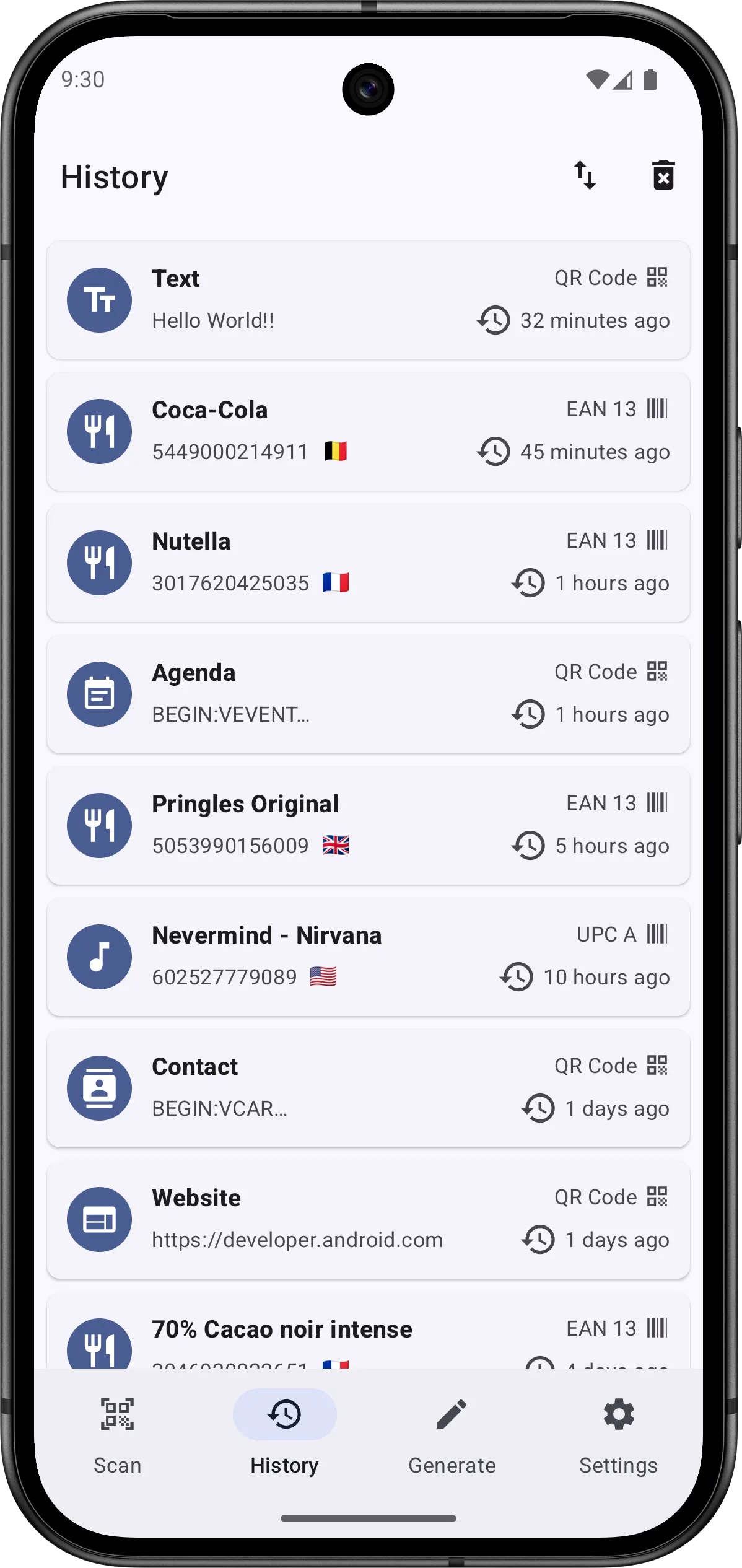
Scan history is kept locally. Entries can be viewed or deleted, the list can be cleared, CSV or JSON can be exported, and JSON can be imported; this version does not provide history search. The project says it does not collect personal information, and our static scan found no tracker SDKs. A code itself can be malicious, however: inspect a web address before opening it and do not treat a printed QR code as proof of who created it.
Automatic and optional online lookups
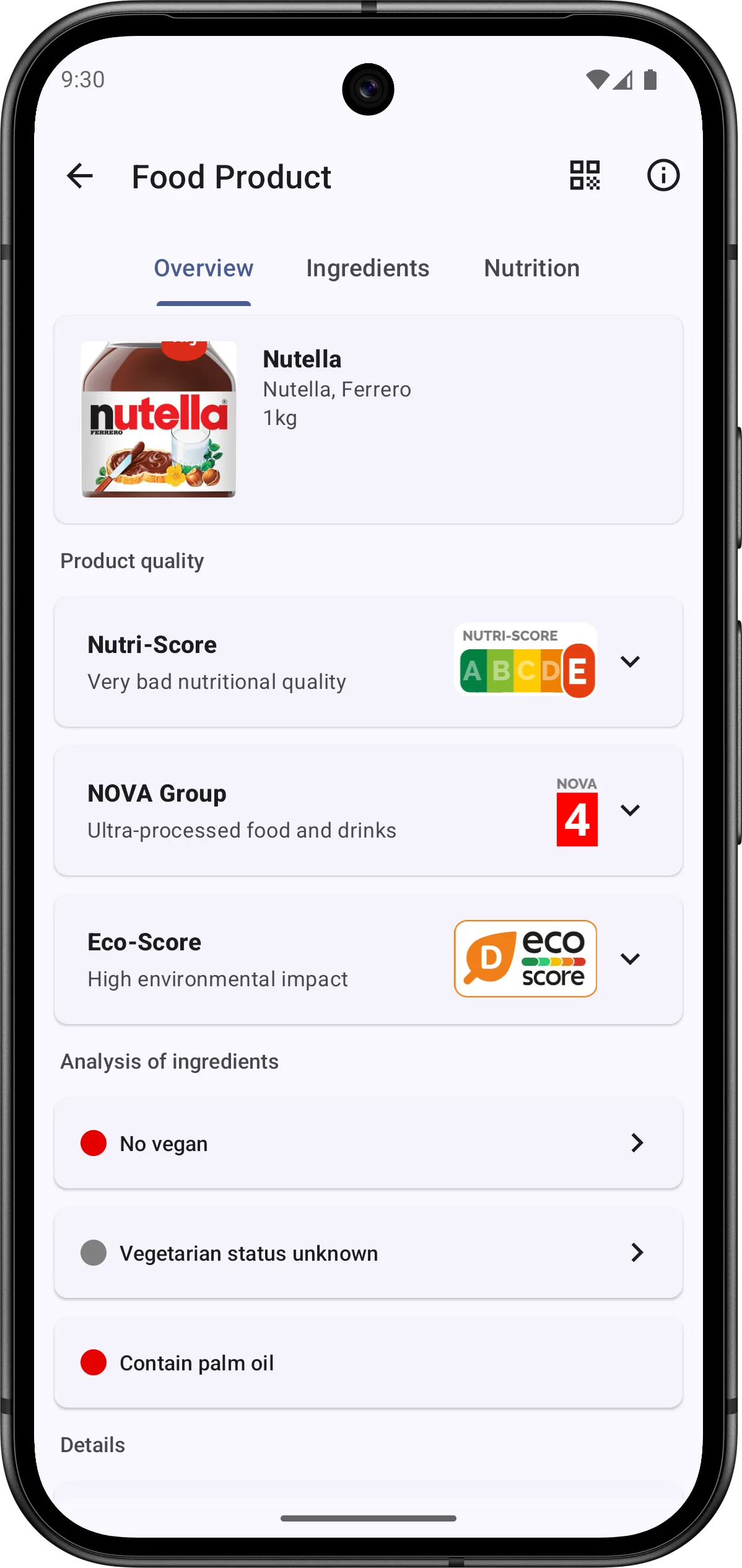
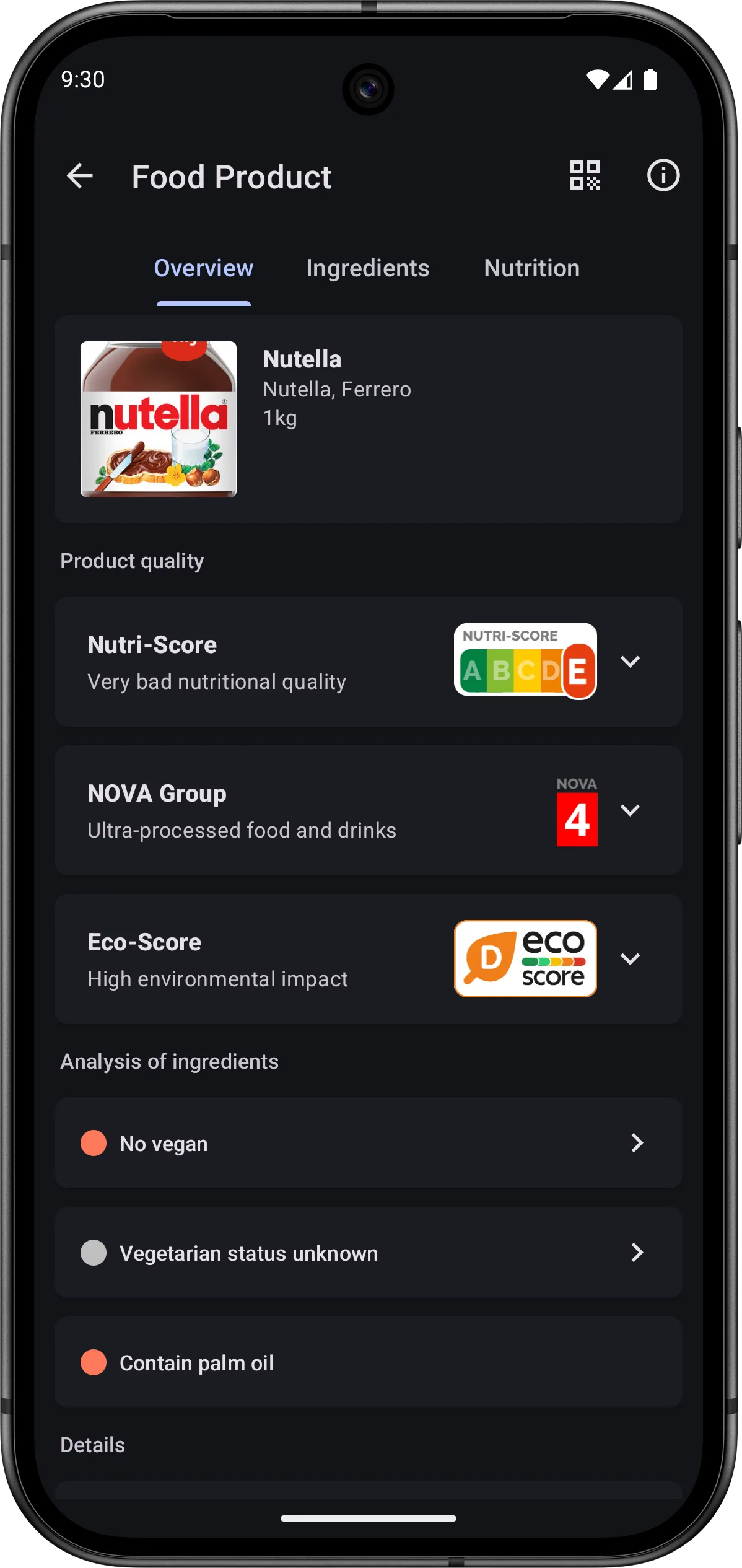
Product and media lookups are network features layered on top of local recognition. With the default automatic-query setting, EAN and UPC results are sent to the selected product database—Open Food Facts by default—and ISBNs beginning 978 or 979 are sent to Open Library. Product choices also include Open Beauty Facts and Open Pet Food Facts. Music results can contact MusicBrainz and then Cover Art Archive. Reopening a history item repeats the relevant query; the setting can be disabled. Each service receives the identifier and normal connection metadata. Results can be missing, community-edited or attached to the wrong regional product, so compare the package in hand rather than using a database answer as a safety or allergy guarantee.
Core decoding, code creation and local history do not require an account. They can be used offline after automatic remote queries are disabled, but product or book lookups, remote links and websites require a connection.
Permissions in context
The APK declares nine permissions. Camera is for live scanning, and vibration is feedback. Internet and network state support lookups and links. Wi-Fi state and Wi-Fi changes support joining a network represented by a scanned QR code. Fine location lets the code generator insert the device’s current position, while read-contacts supports importing contact data for a code you create. Grant only the optional access needed for the feature you intend to use.
Version 1.26.3 fixes detection of horizontally oriented one-dimensional barcodes, adds uppercase TEL: support when creating telephone codes, and updates translations and dependencies. The current official screenshots shown here are taken from the tagged project metadata; older duplicate image files in the F-Droid index were excluded rather than mixed into the gallery.
About this file
- This is F-Droid’s source build of 1.26.3, signed with F-Droid’s key. The developer publishes a separate signing fingerprint for other builds; those cannot update this F-Droid signing line in place.
- The 8.3 MB universal APK supports 32- and 64-bit ARM and x86 and needs Android 6.0 or later.
- Our static scan found no tracker SDKs. Optional database and web requests remain network activity even without a tracker library.
- Its measured SHA-256 is
f76c033c47bf2d79aa1b40aa8869e2d659b82d4ce41048e0a6b1c70c48309cb6, matching the signed F-Droid index. - Source-file headers permit GPL-3.0 or later, while F-Droid’s listing says GPL-3.0-only; this page follows the source headers. Material icons are documented as Apache-2.0 and flags as public domain; the project does not document licences for fourteen bundled Nutri-Score, Eco-Score and NOVA vector assets.
What’s inside the APK
Trackers
No code matching the Exodus Privacy tracker signatures.
Native code
Runs on 64-bit and older 32-bit ARM phones.
Android versions
Built for Android 16 (target API 36).
Permissions
3 of them need your approval first.
CPU types in this build: arm64-v8a (64-bit ARM, almost every phone since 2017); armeabi-v7a (32-bit ARM, older and budget phones); x86 (32-bit Intel, emulators); x86_64 (64-bit Intel, emulators and Chromebooks).
Asks you first (3)
Android shows a prompt before the app can use these.
- Precise location · ACCESS_FINE_LOCATION
- Use the camera · CAMERA
- Read your contacts · READ_CONTACTS
Granted at install (5)
Low-risk permissions Android grants automatically, plus any we have not classified.
- ACCESS_NETWORK_STATE
- ACCESS_WIFI_STATE
- CHANGE_WIFI_STATE
- INTERNET
- VIBRATE
Defined by other apps (1)
Permissions that belong to another app or to this app itself.
- com.atharok.barcodescanner.DYNAMIC_RECEIVER_NOT_EXPORTED_PERMISSION
More Information
- Package name
- com.atharok.barcodescanner
- Version
- 1.26.3 (build 52)
- File size
- 8.3 MB (8,308,418 bytes)
- Requires
- Android 6.0 or later
- Category
- System Tools
- License
- GPL-3.0-or-later
- Developer
- Atharok
- Source code
- gitlab.com/Atharok/BarcodeScanner
- Released
- Jul 10, 2026
- Signed by
- F-Droid, which built this APK from the published source code. Because the key is F-Droid’s, it won’t install over a copy from Google Play or GitHub (or the other way round) without uninstalling first.
- Signer SHA-256
- ebf167ed8846613e6bae943d63cb3deb3703307c682ebb47df4a3f4331af1876
- File SHA-256
- f76c033c47bf2d79aa1b40aa8869e2d659b82d4ce41048e0a6b1c70c48309cb6
- Checked
- , against the F-Droid index · how we check · verify it yourself
Common questions
Is this APK the official Barcode Scanner release?
It is F-Droid’s build rather than the developer’s own: F-Droid compiled Barcode Scanner 1.26.3 from the published source code and signed it with its own key. Its SHA-256 matches F-Droid’s signed index. Because the key is F-Droid’s, it won’t install over a copy from Google Play or GitHub without uninstalling first.
What Android version does Barcode Scanner need?
Android 6.0 or later (API level 23). Version 1.26.3 is built for Android 16 (target API 36). Runs on 64-bit and older 32-bit ARM phones.
Can Barcode Scanner access the internet?
Yes. The APK requests Android’s internet permission. In total it declares 9 permissions, and 3 of them need your approval first.
Does Barcode Scanner contain trackers?
No known trackers: our scan of version 1.26.3 found no code matching the Exodus Privacy tracker signatures. The scan covers known tracker libraries; it doesn’t show what data the app itself sends.
Is Barcode Scanner open source?
Its code is. The source code of Barcode Scanner is released under the GPL-3.0-or-later licence and published at https://gitlab.com/Atharok/BarcodeScanner. Source headers permit GPL-3.0 or later, while F-Droid labels the package GPL-3.0-only. The project documents Material icons as Apache-2.0 and flags as public domain, but not the licences for fourteen bundled Nutri-Score, Eco-Score and NOVA vectors.
Does Barcode Scanner upload every code I scan?
No. QR and other code recognition plus history storage are local. Product lookup is enabled automatically by default: EAN and UPC identifiers go to the selected product database, while ISBNs beginning 978 or 979 go to Open Library; reopening one of those database-backed history entries repeats the query. You can turn off ‘Query remote API automatically’ in settings.
Why can a barcode app ask for contacts, location and Wi-Fi permissions?
Its structured QR features can import a contact when creating a contact code, use the device’s current position for a location code, and connect to a Wi-Fi network encoded in a scanned code. Camera access is for live scanning; choosing an existing image does not require the camera.
Recent releases
| Version | Released | Size | Requires |
|---|---|---|---|
| v1.26.3 · this download | Jul 10, 2026 | 8.3 MB | Android 6.0+ |
| v1.26.2 | Jun 11, 2026 | 8.3 MB | Android 6.0+ |
| v1.26.1 | Jun 10, 2026 | 8.3 MB | Android 6.0+ |
Versions currently kept in the F-Droid repository. We host and check only the newest one. Full changelog.
Alternatives and related apps
-
 Binary Eye A focused open-source QR and barcode reader with a simpler action flow.Download